Showing posts with label ICBM. Show all posts

Sunday, 17 October 2021

A Chinese FOBS surprise (and other stuff of nightmares) [UPDATED]


[this post was updated on October 18 to reflect new information and a refutal of the claim by the Chinese Government. It was again updated on October 21 to reflect new information, including claims that it concerned *two* tests, on July 27 and August 13]


If you want to have nightmares for days, then listen to Jeffrey Lewis menacingly whispering "fòòòòòòòòòòbs..." in the first few seconds of this October 7 episode of the Arms Control Wonk Podcast...

I bet some people connected to US Missile Defense hear this whisper in their sleep currently, given news that broke yesterday about an alledged Chinese FOBS test in August.

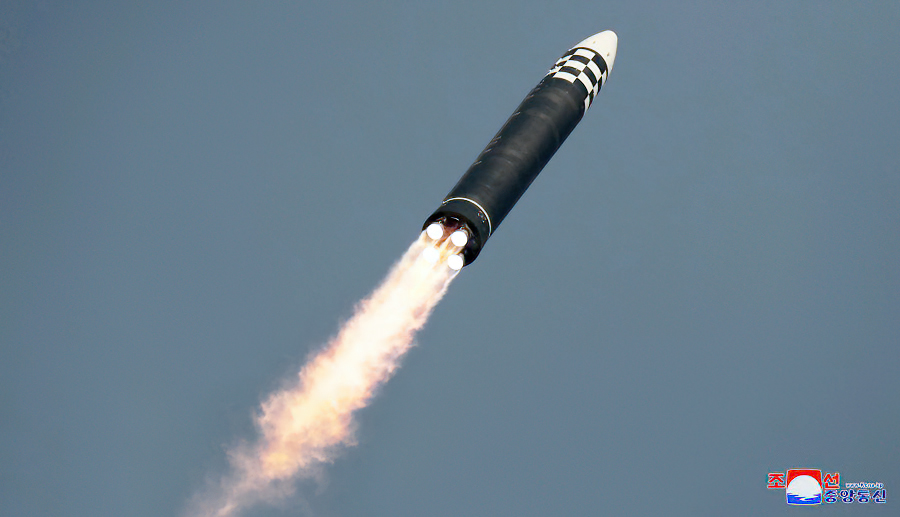
FOBS (Fractional Orbital Bombardment System) has menacingly been lurking in the background for a while. In the earlier mentioned podcast it was brought up in the context of discussing new pictures from North Korea showing various missile systems: including a new one which looks like a hypersonic glide vehicle on top of an ICBM (which is not FOBS, but FOBS was brought up later in the podcasts as another potential future exotic goal for the North Korean missile test program).

image: Rodong Sinmun/KCNA

But the days of FOBS being something exclusively lurking as a menace in the overstressed minds of Arms Control Wonks like Jeffrey are over: the whole of Missile Twitter is currently abuzz about it.

The reason? Yesterday (16 Oct 2021) the Financial Times dropped a bombshell in an article, based on undisclosed intelligence sources, that claims China did a test in August with a system that, given the description, seems to combine FOBS with a hypersonic glide vehicle. [edit: but see update at end of this post]

That last element is still odd to me, and to be honest I wonder whether things have gotten mixed up here: e.g., a mix-up with a reported Chinese suborbital test flight of an experimental space plane from Jiuquan on 16 July this year. [edit: and this might be right, see update at the end of this post]

Anyhow: the FT claims that China:

"tested a nuclear-capable hypersonic missile in August that circled the globe before speeding towards its target".

"Circled the globe" before reaching it's target: that is FOBS.


FOBS

So, for those still in the dark: what is FOBS?

FOBS stands for Fractional Orbital Bombardment System. Unlike an ICBM, which is launched on a ballistic trajectory on the principle of "what goes up must come down", FOBS actually brings a nuclear payload in orbit around the earth, like a satellite.  

For example, a very Low Earth Orbit at an orbital altitude of 150 km, which is enough to last a few revolutions around the earth. At some point in this orbit, a retrorocket is fired that causes the warhead to deorbit, and hit a target on earth.

FOBS was developed as an alternative to ICBM's by the Soviet Union in the late 1960-ies, as a ways to evade the growing US Early Warning radar system over the Arctic. Soviet ICBM's would be fired over the Arctic and picked up by these radar systems (triggering countermeasures even before the warheads hit target). But FOBS allowed the Soviet Union to evade this by attacking from unforseen directions: for example by a trajectory over the Antarctic, which would mean approaching the US from the south, totally evading the Early Warning radars deployed in the Arctic region.

In addition, because FOBS flies a low orbital trajectory (say at 150 km altitude), whereas ICBM's fly a ballistic trajectory with a much higher apogee (typically 1200 km), even when a conventional trajectory over the North Pole would be used, the US radars would pick up the FOBS relatively late, drastically lowering warning times (the actual flight times of an ICBM and a FOBS over a northern Arctic trajectory are not much different: ~30 minutes. Over the Antarctic takes FOBS over an hour. But of relevance here is when the missiles would be picked up by US warning radars).

The Soviet Union fielded operational FOBS during the 1970-ies, but eventually abandoned them because new western Early Warning systems made them obsolete. This notably concerned the construction of an Early Warning system in space, consisting of satellites that continuously scan the globe for the heat signatures of missile launches. DSP (Defense Support Program) was the first of such systems: the current incarnation is a follow-up system called SBIRS (Space-Based Infra-Red System). This eliminated the surprise attack angle of FOBS, because their launches would instantly be detected..


Reenter FOBS

But now China has revived the idea, moreover with an alledged test of an actual new FOBS system (while Russia also has indicated they are looking into FOBS again). From the description in the Financial Times, which is based on undisclosed intelligence sources, the Chinese FOBS system moreover includes a hypersonic gliding phase. [edit: but see update at the end of this post]

Initially this surprised me: I was of the opinion (and quarrelled with Jeffrey Lewis about this, but am man enough to now admit I was wrong and he was right. Sorry Jeffrey, I bow in deep reverance...)  that FOBS in 2021 had very little over regular ICBM technology and was therefore a very unlikely strategy, feasible only as a desperate last defensive act of revenge before total annihilation in case of an attack by others. Because using FOBS in an offensive tactical role would guarantee you to lead to Mutually Assured Destruction.

I still stand behind that last part, but clearly, China thinks they nevertheless need FOBS. Why?

FOBS still has one advantage over regular ICBM's. That is, that a southern trajectory over Antarctica approaching the US mainland from the south, while not going undetected by SBIRS, still avoids warhead intercepts by the US anti-Ballistic Missile Defense (BMD) systems, that are currently geared to intercept a regular ICBM-attack over the Arctic or from the west (North Korea).

I should ad here: "for the time being".... The logical answer by the US (unless they chose to continue to ignore China with regard to BMD, as they did untill now) will now be to extend their BMD coverage to the south. For countering FOBS, they could use the same AEGIS SM-3 technology that they used to down the USA 193 satellite in 2008 (Operation Burnt Frost).

Here are two maps I made, one for a FOBS attack on Washington DC from China and one for a FOBS attack on Washington DC from North Korea. The red lines are ballistic ICBM trajectories (over the Arctic), and current BMD sites are meant to intercept these kind of trajectories. The yellow lines are FOBS trajectories over the Antarctic, showing how these attack the USA "in the back" of their missile defenses by coming from the south instead.

hypothetical FOBS attach from China. Click maps to enlarge

 
hypothetical FOBS attack from North Korea. Click map to enlarge

As the USA is currently putting much effort in Ballistic Missile Defense, developing a new FOBS capacity could be a way by which China is warning the USA that even with BMD, they are still vulnerable: i.e. that they shouldn't attempt a nuclear attack on China from a notion that their BMD systems make them invulnerable to a Chinese answer to such an attack. 

FOBS is hence a way of creating and utilizing weaknesses in the current BMD capacity of the USA, as a counter capacity.

It should be remarked here that the US BMD capacity is geared towards missiles fired by Russia or by  'Rogue Nations' like North Korea and Iran. The USA seems to have largely ignored China so far with regard to BMD. Meanwhile, China is concerned with the US BMD development, particularly deployment of BMD elements in their immediate region.

So this FOBS experiment could also be a way in which China tries to force the US to finally take the Chinese concerns about US BMD deployments and the inclusion of their region into such deployments, serious. 


Outer Space Treaty

China (like the US and Russia) is a signatory of the Outer Space Treaty (or, in full: the Treaty on Principles Governing the Activities of States in the Exploration and Use of Outer Space, including the Moon and Other Celestial Bodies). 

FOBS seems to be a violation of this treaty, as Article IV of the treaty clearly states that:

 "States Parties to the Treaty undertake not to place in orbit around the earth any objects carrying nuclear weapons or any other kinds of weapons of mass destruction"

This is exactly what FOBS does: it (temporarily) places a nuclear weapon in orbit around earth, so that they can later bring it down over a target.

The Soviet Union, when testing FOBS in the late '60-ies, tried to get out from under this by claiming that, as their FOBS did not complete a full orbit around the Earth, article IV of the treaty didn't apply. The US Government, surprisingly -and for opportunistic reasons- went along with this interpretation (see this article in The Space Review). Which is, pardon me the word, of course bullshit: in the sense of orbital mechanics (that is to say; physics), FOBS clearly does place an object in orbit, and it is very clear too by the fact that after launch it needs an actual, separate deorbit burn to get it down on the target.


North Korea and FOBS

How about North Korea? As I mentioned, FOBS has been repeatedly mentioned as a potential route North Korea might take with its nuclear missile program. Some fear that NK could be developing a FOBS capacity in order to have a means of final-revenge-from-over-the-grave from the Kim Jong Un regime in case of a 'decapitation' attempt (an attempt to end the Kim Jong Un regime by a targetted military strike on KJU and  his family members).

One reason behind this fear is that North Korean Kwangmyŏngsŏng (KMS) satellite launches were on a trajectory over Antarctica, bringing the payload over the US only half a revolution after the launch.

Compare this launch trajectory of KMS 3-2 in December 2012 for example (which comes from this 2012 blog post), to the hypothetical FOBS trajectory in the map below it: the similarities are obvious (if perhaps superficial).


KMS satellite launch trajectory (above) and hypothetical FOBS attack from North Korea (below). Click map to enlarge


It wouldn't surprise me if FOBS will quickly replace the EMP 'threath' that over the past decade has been hyped by certain hawkish circles in the US defense world, as the horror-scenario-en-vogue.


Something worse than FOBS? DSBS!

So, can we think of something even more sinister than FOBS? Yes, yes we can, even though so far it is completely fictional and a bit out there (pun intended).

Let us call this very hypothetical menace DSBS. It is truely something out of your nightmares.

DSBS is a name I coined myself for a so far nameless concept: it stands for Deep Space Bombardment System. DSBS at this point is purely fictional, with no evidence that any nation is actively working on it: but the concept nevertheless popped up, as a distant worry, in a recent small international meeting of which I was part (as the meeting was under Chatham House rules, I am not allowed to name participants). So I am not entirely making this up myself (I only made up the name to go with this so far unnamed concept).

The idea of DSBS is that you park and hide a nuclear payload in Deep Space, well beyond the Earth-Moon system: for example in one of the Earth's Lagrange points. There you let it lurk, unseen (because it is too far away for detection). When Geopolitical shit hits the fan, all is lost and the moment is there, you let your DSBS payload return to earth, and impact on its target.

With the current lack of any military Xspace (Deep Space) survey capacity,  such an attack could go largely undetected untill very shortly before impact. Your best hope would be that some Near Earth Asteroid survey picks it up, but even then, warning times will be short. Moreover, with the kind of impact velocities involved (12+ km/s), no existing Ballistic Missile Defense system likely is a match for these objects.

Far-fetched? Yes. But that is also something once said about FOBS...

(Note: I hereby claim all movie rights incorporating DSBS scenario's)

(added note: I only now realized, when answering a comment to this blogpost below, that, unlike FOBS or placing something in GEO, a DSBS parked in one of the Lagrange points would NOT violate Article IV of the Outer Space Treaty, because the device would NOT be in orbit around Earth (but co-orbital with Earth).


UPDATE 18 Oct 2021 10:45 UT and 20:10 UT: 

NOT FOBS?

China denies that they did a FOBS test: "this was a routine test of a space vehicle to verify technology of spacecraft's reusability", says a Chinese government spokesman. They reportedly also say the test happened in July, not August. That could mean that this earlier reported test flight of a prototype space plane on July 16 was concerned (a suspicion I already voiced earlier in this blogpost and at the Seesat-L list). 

Of course, as Jeffrey Lewis rightfully remarks, spaceplane technology shares a lot with FOBS technology. In Jeffrey's words:  "China just used a rocket to put a space plane in orbit and the space plane glided back to earth. Orbital bombardment is the same concept, except you put a nuclear weapon on the glider and don’t bother with a landing gear."

At the time, this space plane test was interpreted to have been suborbital, as the space plane reportedly landed in Alxa League, 800 km Badanjilin Airport, 220 km from the launch site, Jiuquan. I today however realised that this might have been a misinterpretation: it might actually have been an orbital, not suborbital, test fligth landing at the end of the first revolution. 

Indeed, I managed to create a hypothetical 41.2 degree inclined proxy orbit for a  launch from Jiuquan that brings it over Alxa League Badajilin Airport at the end of the first revolution.

Slightly more on this in this follow-up blogpost. which also points out that a Chinese source confusingly points to yet another airport as the landing site of the July 16 space plane test (if it was a space plane at all and not some upper atmospheric aircraft vehicle).

It could be that the Chinese Government is now seizing on the July 16 test to explain away a later FOBS test.

click map to enlarge

 UPDATE 21 October 2021 10:25 UT:

New information circulated by Demetri Sevastopulo, the FT journalist that broke the story, indicates that there were *two* tests, on July 27 and August 13. The first date tallies with rumours that reached me on July 29 about an 'unusual' Chinese test apparently having taken place (that I at the time erroneously though might refer to the July 16 'space plane' test).

Friday, 17 September 2021

An upcoming Trident-II D5 SLBM test in the Atlantic

click map to enlarge

A few days ago a Navigational Warning (NAVAREA IV 838/21, also issued as HYDROLANT 2336/21) appeared which points to an upcoming Trident-II D5 SLBM (Submarine-Launched Ballistic Missile) test from a US or Royal Navy SSBN on the Atlantic Eastern Missile Range between 12:30 UT on September 17, and 1:23 UT on Sept 20. The distance between the launch area and MIRV target area is about 9900 km.

This is the text of the Navigational Warning (the map in top of this post shows them mapped, along with a simple ballistic trajectory):

151459Z SEP 21
NAVAREA IV 838/21(11,24,26).
ATLANTIC OCEAN.
FLORIDA.
1. HAZARDOUS OPERATIONS 171230Z THRU 200123Z SEP
   IN AREAS BOUND BY:
   A. 28-56N 079-59W, 29-02N 079-53W,
      29-06N 079-37W, 28-59N 079-10W,
      28-37N 079-10W, 28-36N 079-35W,
      28-45N 079-56W.             
   B. 28-24N 076-44W, 28-42N 076-42W,
      28-21N 074-40W, 28-06N 074-44W.
   C. 27-27N 071-21W, 27-52N 071-15W,
      27-25N 068-46W, 26-54N 068-54W.
   D. 17-22N 044-54W, 18-33N 044-32W,
      16-54N 040-55W, 16-00N 041-23W.
   E. 09-00S 003-51W, 08-22S 003-22W,
      12-35S 002-40E, 13-05S 002-19E,
      11-56S 000-16E, 12-09S 000-16W,
      11-34S 000-20W.
2. CANCEL THIS MSG 200223Z SEP 21.

The launch area (area A) is one of two launch areas used for these kind of tests in the Atlantic (see an earlier post from 2019 analyzing several of these launches). It is the variant closest to the Florida coast, one which I suspect is used when the launch has an 'audience' of officials.

The area is close enough to the Florida coast that Florida east coast residents might see the launch, as has previously happened.

The target area is the regular target area in the southern Atlantic some 1000 km out of the coast of Angola.

Areas B, C and D are where the first, second and third stage splash down.


The location of the hazard areas does not match a simple ballistic trajectory well (such a trajectory is indicated by the line in the map in the top of this post), which might point to some mid-flight manoeuvering of the MIRV-bus.

The test launch is probably a DASO ("Demonstration and Shakedown Operation"), done to recertify the readiness of the submarine and its crew after major overhauls. One candidate submarine for this test launch is the Ohio-class SSBN USS Tennessee (SSBN 734) which reportedly completed a major overhaul at Kings Bay on July 1. [EDIT 18 sept 2021 15:45 UT: it actually was USS Wyoming, which fired two Trident missiles as part of the test]


UPDATE 18 Sep 2021 15:45 UT

The US Navy has announced that as part of DASO-31, the Ohio-class SSBN-742 USS Wyoming has fired two Trident missiles on September 17th.

image: US Navy/David Holmes
image US Navy/David Holmes


Saturday, 3 July 2021

OT (but missile related): on Ian Fleming, Bond, and the fictional Moonraker ICBM


 Note:  an update was added at the end of the post, a day after initial publication

Recently, I was re-reading Ian Fleming's 1955 James Bond novel 'Moonraker'. The plot of this novel revolves around an ICBM test launch from a site on the coast of Kent. Re-reading the novel, I exclaimed at some point: "Ha, obviously a lofted trajectory!'.


That started me down a rabbit hole, for my next thoughts were: does the Moonraker test-flight and distances mentioned in the novel make sense? What if I modelled it in STK? 

So I tried, and discovered amongst others that Fleming apparently mixed up nautical miles and kilometers at some point. And used his car to measure distances.


Moonraker: the novel, not the movie

First, since most people will be familiar with the movie rather than the novel: the plot of the 1979 movie 'Moonraker' is quite different from the plot of the 1955 novel

Basically, the only things they have in common are the title and the name of the villain. In addition, both plots involve rocketry (but of a very different kind).

The 1979 plot of the movie starring Roger Moore involves Space Shuttles (one of which is named 'Moonraker') launched from the Jungle of Brazil; a stealth Space Station, (that has a radar cloaking device, totally ignoring that optically it would still be very visible and a naked eye object in the sky); and a plan by a megalomaniac Space Entrepreneur, Hugo Drax, to bombard Earth from that Space Station with a gas meant to exterminate the whole Earth population, except for a suspiciously Arian elite aboard his Space Station.

The 1955  novel plot on the other hand has no Space Shuttles and no Space Stations and, unusual for a Bond novel, all action takes place in the UK. The plot entirely revolves around the test launch of an experimental ICBM called 'Moonraker', developed by a megalomaniac entrepreneur called Hugo Drax, from an RAF test site on the coast of Kent in the UK. 


my 1965 Signet Book copy of the novel


The 1955 Moonraker plot

Let us first go into the plot of the novel a bit more in detail, for those not familiar with it, in order that you will better understand the analysis that will follow. Those of you who know the book, can move on to the next part of this post.

Somewhere in the first half of the 1950-ies, the development of a British ICBM and ICBM test site on the coast of Kent is being funded by a wealthy mineral merchant called Sir Hugo Drax, who ostensibly offers this service as a patriotic coronation present to the newly crowned Queen Elizabeth II. The ICBM, called 'Moonraker', is meant to end the danger of a new war (note that the book was written less than 10 years after the end of World War II) because it will be able to strike any European country trying to atom-bomb London. There is nuclear deterence for you, in a 1950-ies novel!

Sir Hugo Drax, the villain, has a shady history. He purports to be a former British soldier who is a survivor of a Nazi Werwolf attack at the end of WW-II, the bombing of an Allied Headquarters. In reality, he perpetrated that bombing but was caught up in the resulting explosion, after which he took on the identity of one of the British casualties. His real name is Graf Hugo von der Drache, and he is a German Nazi and former SS officer c.q. Werwolf operative, who is longing for revenge on Britain for the German defeat in WW II. 

He hatches a plan where, using his post-war accumulated wealth from the trade in Columbite (a metal vital for rocket engines) and his Columbite stash, he develops and builds the Moonraker, a single stage ICBM with a range of 4000 miles, ostensibly for the British Government. 

The rocket is to be launched from a RAF facility on the chalk cliffs of Kent, on the Channel coast between Kingsdown and St Margaret's Bay. The target for the test launch is an empty part of the North Sea some 80 miles from the launch site  (i.e. it is launched on a highly lofted trajectory). Drax, however, plans - and nearly succeeds were it not for the interference by Bond - to illicitly swap the instrument payload for a nuclear warhead, and target Buckingham Palace instead. He has hidden a homing device for that purpose in a house on Ebury Street, London, close to the Palace. He is in cahoots with the Soviets, who supply him with the nuclear warhead as well as a 50-man crew of German ex-Werwolf and rocket experts from Peenemünde. They also attempt to provide him an escape by submarine.

James "007" Bond has his first encounter with Drax when his MI6 superior M wants him to investigate whether Drax cheats at cards (!) at the private Club 'Blades' of which M is a member. Drax does indeed cheat, and Bond then tricks him in overplaying his hand, causing Drax to lose 15000 British Pound to Bond.

Shortly after that, Bond meets Drax again as Bond is send on loan to Scotland Yard Special Branch, after one of the Ministry of Supplies' security agents on the Moonraker site, Tallon (who had discovered something was afoot, having spotted the Soviet submarine delivering the nuclear warhead to Drax), is murdered. With the help of a Special Branch agent already embedded in the facility, a female agent called Gala Brand (interestingly, one that proves immune to Bond's charms), he tries to find out what secret the facility is hiding. Following an assasination attempt on Bond and Brand and some further shenanigans, Brand is found out and kidnapped after she steals Drax notebook, and realises that the gyroscope settings for the test flight have been changed such that it will come down at another target than the empty piece of North Sea intended (this target turns out to be Buckingham Palace: Drax has hidden a radio homing devive in a house on Ebury Street close to Buckingham Palace). 

After Bond, in pursuit of the car with the kidnapped Brand, is captured too, Drax unveils his personal history and evil revenge plan to them, and places them, bound, in the Moonraker launch silo, with the intention that the exhaust flame from the launch will burn them to ashes. Bond and Brand manage to get rid of their constraints, change the gyroscope settings back to the original values, close the explosion-resistant metal doors between the silo and Drax office, and lock themselves in the shower of Drax' office, letting the water run, to survive the blast (and there you though Indy locking himself in a fridge in "Indiana Jones and the Kingdom of the Crystal Skull" was jumping the shark!). The Moonraker is launched, and Drax and his men are picked up by the Soviet submarine that speeds off towards the north, into the original target area. Upon impact of the Moonraker in the target area in the North Sea, the nuclear warhead explodes, causing a tsunami that sinks the Soviet submarine (all hands on board including Drax perish) and incidentally also creates havoc on the Dutch coast. 


Leads and information from the novel

Fleming provides several pieces of information on the Moonraker ICBM and the locations involved in the plot that are hepfull for this analysis.

1. the Moonraker facility in Kent

The location of the RAF facility from where Moonraker is launched is at the edge of a chalk cliff near Kingsdown and St. Margaret's Bay on the coast of Kent, overlooking the English Channel. The flame trench (rather a tunnel) of the launch silo ends on the beach. The location can be positively geolocated to the grounds of the Walmer and Kingsdown Golf Club, at about 51.17 N, 1.40 E (see image below). The Golf Course, established in 1909, was requisitioned by the British Government during World War II and turned into a facility for the Army, RAF and Royal Navy. After the war, in 1948, it was handed back and turned back into a golf course. 

For the purpose of the novel, Fleming let the Ministry of War hold on to the site for a few more years than they in reality did.


location of the fictional Moonraker site, between Kingsdown and St. Margaret's Bay


Ian Fleming in fact was very familiar with this area of Kent. He had a lease on a cottage on the beach of St. Margaret's, called "Summer's Lease", just 2.5 km south of the site, where he spent long weekends and hollidays with his wife and friends. Given his wartime background in Navy Intelligence, the existence of the former military facility close to his weekend hideout will certainly have been known to him, even though it was no longer used by the Government by the time he wrote his novel.

2. The location of the homing device at Ebury Street, London

Drax' house near Buckingham Palace in London, where he places the radio homing device for the Moonraker, is described as 'a small house at the Buckingham Palace end of Ebury street' and 'just behind Buckingham Palace'. From the description given when Bond is in pursuit of Drax' car with the kidnapped Gala Brand (who is initially brought to the Ebury Street house), it must be only a few meters from the corner of Lower Grosvenor Place and Ebury Street (this is called Beeston Place now but formerly was part of Ebury Street), near the corner with Victoria Square, at approximately 51.4979 N, 0.1455 W.


location of Drax' fictional house on Ebury Street (image: Google Streetview)


This is indeed very close to Buckingham Palace: some 350 meters from the Palace building itself, and only a hundred yards (as stated in the novel) from the surrounding Palace grounds.

Again, this was a familiar spot for Fleming: between 1936 and late 1939 he himself lived in Ebury Street, at number 22B, some 250 yards further along the road (a little bit too far to entertain the idea, as I initially did, that the house in question actually is meant to be number 22B: this would however not fit the location descriptions well). Interestingly, the previous tenant of the same appartement had been the infamous British Fascist leader Oswald Mosley.


Ebury Street 22B, London, Fleming's former home (image: Google Streetview)


Moreover, around the time he was writing 'Moonraker', Fleming and his wife Ann lived (when in London and not at their Goldeneye estate in Jamaica, where Fleming did most of his actual writing) very close to the actual location indicated: at 16 Victoria Square. This is only some tens of meters (!) from the indicated location in Ebury Street, in what is basically a side street of it (see Google Earth image below). This would place Drax' house and the hidden radio homing device almost in Fleming's proverbial backyard!

[added note: pretty much the same conclusions are reached in this blogpost on the "Mapping the World of James Bond" blog, which I only found after I wrote mine].

Fleming's Victoria Square residence. Ebury street at left.


3. The effects of a nuclear bomb detonation in this location

So what would the effects be, on Buckingham Palace and London, of a nuclear detonation at the indicated spot on Ebury Street?

This of course depends on the yield of the nuclear warhead. The warhead in question is provided by the Soviets in the novel. It stands to reason that it could have been an RDS-4,  a 28 kiloton device that was first tested by the Soviets on August 23, 1953. It was their first mass-produced atomic bomb, compact, weighing 1200 kg, and went on to become one of the warheads used on the first Soviet strategic nuclear missile, the medium range R-5M (or SS-3).

So what would a 28 kiloton RDS-4 detonation in Ebury street do? I turned to Alex Wellerstein's fabulous NUKEMAP website to answer that question. Below are three maps, the first two for a ground detonation (second map is a detail of the first), the third for a detonation at 600 meter altitude:


28 kiloton ground detonation. Click to enlarge

28 kiloton ground detonation: detail of ground zero. Click to enlarge


28 kiloton airburst at 600 meter. Click to enlarge
 

The results would be dramatic for both central London and Buckingham Palace (and a much wider area of southeast Britain when we consider the nuclear fall-out). Buckingham Palace would indeed be in the major devastation zone, with almost certain 100% casualties.

Drax' attempt to bomb London was eventually foiled by Bond and Brand. But how about the original test target in the North Sea: where would that be located?


4. The location of the Moonraker test target area in the North Sea

Here, we run into a bit of a problem: Fleming's descriptions of where the North Sea test target area is located, are ambiguous, as distances and descriptions given by him do not fit each other

He mentions a distance of '80 miles' from the launch site, but also describes it as being on a line 'between the Frisian Islands and Hull'. These two indications cannot be well reconciled as the mentioned line Hull-Frisian Islands is much further away than 80 miles, in fact over twice as far, close to 280-290 km or 175-180 miles (depending a bit on which of the Dutch Frisian islands you take). I will return to this later in this post.

What is also implicated in the novel, is that the bearing of this location as seen from the launch site is at an approximate 90 degree angle to the bearing of the secret target in London. This would place the bearing to the North Sea target site as seen from the Moonraker facility in Kent at about 19.5 degrees from north. This bearing would intersect a line between Hull and the Frisian Islands at about the middle of the latter line, near 53.2 N, 2.6 E, some 80 km from the nearest British and 145 km from the nearest Dutch coast: which seems very reasonable if you want it to be as far as possible from any land, at that range. By contrast, a distance of 80 miles along this bearing would place the spot much closer to the British coast, at around 52.26 N, 2.03 E, about 25 km out of the coast near Lowestoft.

Fleming seems to have choosen the "80 miles" value in order to get a similar distance between the Kent launch site and the North Sea target area, as the distance between the Kent launch site and Ebury street in London. This reveals something interesting: the real distance to Ebury street as seen from the Walmer and Kingsdown site is actually a bit shorter than 80 miles: 114 km or about 71 miles, 10 miles short. So why the '80 miles' then?

The likely answer is that Fleming did not take this distance from a map, but measured it by driving the distance in his car (or rather, have his stepson do that). Google Maps tells me that the road distance (as opposed to the distance as-the-crow-flies) between Fleming's house in St. Margaret's Bay and Ebury street in London is 81 miles. It is known that Fleming actually had his stepson drive the distance in order to check the fastest possible driving time between the two locations (which he needed for the car chase scene when Gala Brand is kidnapped and brought to Ebury Street).

Incidentally, the value helps establish that the miles mentioned in the novel are statute miles, not nautical miles. This is relevant, as in rocketry either kilometers or nautical miles are generally used, while Fleming, as a former Navy Intelligence officer, would have been familiar with nautical miles too. The average British novel reader on the other hand, would interpret 'miles' as statute miles, and that is what they appear to be here.

There is a potential for confusion here, and perhaps that is what happened and created the mismatch between '80 miles' and 'on a line between Hull and the Frisian Islands'.

Let us plot some of these distances (and the highly lofted trajectories involved) in a map. This is an oblique view of the situation, created with STK: note that the indicated 80 mile radius is in statute miles, while the outer circle, touching the line between Hull and the Frisian Islands, is 129 nautical miles instead (I did this for a reason, see below). For reference, 1 statute mile = ~1.6 km, and 1 nautical mile = ~1.8 km.


click to enlarge

One way Fleming could have introduced the erroneous description of the target area being "on a line between Hull and the Frisian islands" is by plotting the distance on a nautical map, e.g. an Admiralty chart, and making a mistake with the map units (perhaps after a drink too many). 

The 1950-ies era Admiralty charts had drawn scale bars in feet, nautical miles and meters, but not in statute miles, so Fleming might have converted statute miles to (kilo-) meters. Since 80 statute mile equals ~129 km, did Fleming perhaps by mistake plot 129 nautical miles instead of 129 kilometer? This would bring you close to a line between Hull and the southernmost of the Frisian Island. 

Alternatively, he could have mistakenly converted 180 miles instead of 80 miles, to kilometers (180 statute miles is ~290 km), which would bring you slightly further out, on the line between Hull and the northernmost Frisian Islands, at about 155 nautical miles.

5. The Moonraker maximum range and delta V

Before going to Drax' Kent facility, Bond is briefed on the Moonraker missile. From this briefing, we learn that the missile has a range of about 4000 miles (6437 km), apogee (the highest point it reaches above earth surface) at 1000 miles (1609 km), and can reach a speed of 15000 miles an hour. The latter translates to about 6.7 km/s.

Using STK, I modelled a missile trajectory with a range of 6437 km and apogee at 1609 km. For such a trajectory, I get a delta V of 6.44 km/s, or about 14417 miles/hour, so Fleming's ~6.7 km/s is not far off, certainly if we allow the "15000 miles per hour" to be a rounded-off value (during te briefing, this is said to be a value "in te neighborhood off"). In that sense, the specifications of the Moonraker appear realistic and correct.

The Moonraker itself is a single stage rocket: from the descriptions basically a V2 on steroids. That raises some eyebrows given the quoted 6400 km range. While both the USA and Soviet Union worked on single stage ICBM designs during the 1950-ies, none of this ever went beyond the design stage, and that was probably for a reason. The closest to it that did fly (and here I am obliged to the combined Hive Mind of Missile Twitter for their help) and had a range similar to the Moonraker was the US SM-65 Atlas, which first flew in 1957. This was however a "1.5 stage" rocket as it had two auxiliary jettisonable side boosters.

But let that be, and let us accept the premise of a single stage Moonraker. With a 4000 mile (6437 km) range, the whole of Europe and a considerable part of the Soviet Union would be in range: only eastern Siberia would not be. In that sense, the Moonraker missile would fulfill its quoted deterence role.


click to enlarge

So what would be the apogee of the highly lofted Moonraker test shot into the North Sea?

I used the 6.4 km/s delta V value I calculated, to determine the apogee altitude for the lofted trajectory
(a 'lofted trajectory' is where you fire your missile at full engine capacity, so you can test its maximum performance, but limit your horizontal range, by firing it under a very high angle, almost straight upwards. This way you can monitor the missile over almost its full trajectory from the launch site, and avoid overflying neighbouring countries. North Korea for example did this on several of their ICBM test launches).

The 80 statute mile and 129 nautical mile ranges respectively give quite similar results: an apogee at 3169 resp. 3168 km altitude. Quite a lofted trajectory indeed! It is only slightly less than the 28 July 2017 North Korean lofted test of a (two stage) Hwasong-14 missile.

The image below shows a maximum range operational trajectory (red) for the Moonraker, as well as the lofted trajectories for target sites at 80 statute miles (solid white), 129 nautical miles (dashed white), and the secret London target (dashed yellow)

click to enlarge


Conclusions

Fleming appears to have done his homework well with regard to ballistic missiles: his speeds, apogees and maximum ranges match. He did make a curious mixup in defining the North Sea target area for the lofted trajectory test around which the novel revolves: his stated distance in miles does not match with the description of "on a line between Hull and the Frisian Islands". Perhaps, he mixed up kilometers and nautical miles when measuring distances on a map. 

As an aside, we can deduce that he measured the distance between the launch site on the Kent coast and the secret target near Buckingham Palace in London by driving the distance in a car, rather than measuring it on a map. 

All locations mentioned in the novel were familiar to Fleming, as he lived or had lived in houses quite near them. 

Conspicuously absent in the novel: grid fins!


ADDENDUM 4 July 2021

Following publication of this post, some great questions were raised on Twitter about the fate of the Soviet submarine. How could it get to the impact area so soon?


In fact, with such a highly lofted trajectory, it would take the Moonraker some 38 minutes to complete its flight, from launch to target impact, giving the Soviet submarine some time to travel northwards. And the Soviet submarine is not sunk by the immediate blast effect of the nuclear detonation, but by the resulting tsunami wave, which travels further than the blast wave.

BBC Radio reporter Peter Trimble, who due to the tsunami perishes aboard the HMS Erganzer while live-reporting the test flight, tells his audience that he and the Navy ship are just north of the Goodwin Sands, with the target area some "70  miles north" of him. He could see the Moonraker launch, "must have been ten miles away". So this all places him some 10 miles (16 km) from the launch site.

He sees the Soviet sub at a distance of about 1 mile, heading north towards the impact area. After it submerges, he tells the audience that the ASDIC operator says it is travelling at 25 knots, or about 46 km/h (this is a bit faster than the Soviet submarines of this era were actually capable off: their peak speed when submerged was near 16 knots). This means that from the moment of launch of the missile (when the submarine left with Drax cum sui) to the moment of impact of the missile, it could have travelled some 29 kilometers towards the target area. This would place it some 100 km south of the impact area (going from the "80 mile" figure for the impact area distance to the launch site) at the moment of impact and nuclear detonation. Not quite in the impact area, as Trimble suggests.

I used an online tsunami speed calculator to get an idea of how long it would take the tsunami wave generated by the nuclear explosion to reach the HMS Erganzer and the submarine. A look at a bathymetry-map shows that the relevant part of the North Sea is between 25 and 50 meters deep. Bond's superior M, at the end of the novel, mentions that the wreckage of the submarine is located at a depth of 30 fathoms, or 55 meter. If we go with that value, a tsunami wave would travel at a speed of about 23 meter/s (or 83 km/h). It would take it some 80 minutes to reach HMS Erganzer. It would reach the Soviet submarine, travelling towards the wave at 46 km/h, a bit earlier, roughly 50 minutes after the detonation. The submarine by then, assuming a course straight towards the impact point, would be some 70 km from the impact point when it meets the tsunami wave.

This clearly does not tally with the live radio report, which suggests the submarine is in visible range of the HMS Erganzer when the tsunami hits (with both vessels hit at about the same moment). It is also clear that the sequence of events would take much longer than the novel implies: in the novel, which quotes a verbatim live radio report, it looks like the events unfold in matters of seconds.

Of course it is all fiction, and Fleming never meant Bond's adventures to be a poster-child for realism, so we should not be surprised by these lapses in the plot. Although it surprises me that Fleming, as an ex Navy Intelligence Officer, get's the missile part quite right, but not the nautical part!

I have been looking for information on whether a 28 kiloton nuclear explosion would be able at all to generate a tsunami strong enough to create havoc at 100+ km from the detonation site. I found this but the math involved is a bit too complex for me. Some of the approximate scaling equations at the end of the book, which are however for deep water, would suggest it to be not a big deal at this distance, in fact.

As a last note: Trimble, in his radio broadcast, mentions at a certain moment: "Twelve minutes past noon. The Moonraker must have turned and be on her way down". If we take this to mean that apogee was reached at 12:12 GMT, then, given the trajectory I modelled in STK, we can determine that launch of the Moonraker was around 11:53 GMT. Bond manages to reset the gyroscopes four minutes before the launch moment, Fleming tells us, which would be 11:49 GMT then, which could fit as Fleming also tells us that Bond, looking at his watch when he does so,  is leaving his hiding place for the missile at 11:47. This gives him 2 minutes to get to the missile and do his thing, and then two more to get back from the missile to Brand at Drax' office. In fact he must have done it in a minute, as he spends at least one minute (as at some point he says "only one minute more [to launch]" in the office before the launch moment.


Sunday, 25 April 2021

An upcoming French ICBM/SLBM test [UPDATED TWICE]

click map to enlarge

UPDATE (see end of post for more info): the test happened and it was an M51 SLBM

Navigational Warnings HYDROLANT 1140/21 and NAVAREA IV 337/21 which appeared today suggest that France will be test-firing some sort of ICBM or SLBM over the northern Atlantic between April 28 and May 21. 

As indicated by the position of area A, the launch will be from from DGA Essais de Missiles, a missile base of the French Military on the coast of the Gulf of Biscaye, some 70 km southwest of Bordeaux. The target area appears to be north of  Bermuda, some 5500 km from the launch site.

250005Z APR 21
HYDROLANT 1140/21(and NAVAREA IV 337/21)
NORTH ATLANTIC.
BAY OF BISCAY.
FRANCE. 
1. MISSILE OPERATIONS 0001Z TO 1000Z DAILY
   28 APR THRU 21 MAY IN AREAS BOUND BY:
   A. 45-30.00N 006-39.00W, 44-35.00N 001-28.00W,
      44-26.00N 001-16.00W, 44-18.00N 001-17.00W,
      44-14.00N 001-36.00W, 45-08.00N 006-45.00W.
   B. 47-33.00N 019-01.00W, 47-21.00N 015-35.00W,
      45-29.00N 015-33.00W, 45-41.00N 019-12.00W.
   C. 35-50.00N 070-08.00W, 35-50.00N 063-38.00W,
      34-15.00N 063-38.00W, 34-15.00N 070-08.00W.
   D. 46-38.12N 039-31.05W, 45-37.02N 039-15.53W,
      45-53.52N 036-47.10W, 46-54.92N 036-59.92W.
2. CANCEL HYDROLANT 1124/21.
3. CANCEL THIS MSG 211100Z MAY 21.

I have mapped  the four hazard areas from the Navigational Warning in the map in top of this post. Areas A, B and D are along a simple ballistic trajectory. Area C, the target area north of Bermuda, is not (as can be clearly seen), so either the post-boost vehicle or the dummy MIRV's fired from it will take a different course at some point. 

Note that the dog-leg which I have drawn in the map is very hypothetical and not very realistic: its purpose just is to show that the target area deviates from the initial missile trajectory. [added note: it is much more likely that the trajectory changed is effected much earlier in the  sequence]

Depending on the time of, and weather conditions during, this test launch, it might generate some UFO reports from the southwest French and northern Spanish coast.

As far as I am aware of, the French only have SLBM's in operational service at this moment. Their landbased ICBM's were mothballed in 1996. 

So the launch might be a (land-based) launch of an M51 SLBM. The ground range and size of the areas A,B and D with respect to to the launch site are similar to those of another recent French SLBM test, fired from a submarine in front of the Breton coast on June 12, 2020 (I wrote about that test here).

Click to enlarge

UDATE 1: 

I spoke with Joseph Trevithick for this article in The Drive which also has insights from several other experts.

What I did not know, but learned from the article, is that the DGA Essais de Missiles has a pool with a submerged launch platform, so they can simulate SLBM launches from a submarine. So if it is another M51 test, this makes the choice of the launch site less odd.

Here is some footage from an earlier SLBM test from this submerged platform at DGA Essais de Missiles:


UPDATE 2
(28 April 2021)

The French Ministry of Defense has announced that a successful test with an M51 SLBM was indeed conducted from DGA Essais de Missiles in the morning of 28 April. Bulletin (in French) here.

In the hours around the test, French and US military monitoring planes were in the air near the target area north of Bermuda:


The twitter account of the French Direction générale de l'armement published this video of the launch:


The image below, which is from the bulletin put out by the French Ministry of Defense, may or may not show the actual missile fired:


Monday, 8 February 2021

A possible (now CONFIRMED) Trident-II SLBM test launch between February 9 and 14, 2021 [UPDATED]

click map to enlarge

A Navigational Warning, NAVAREA IV 117/21, appeared yesterday, and is suggestive of an upcoming Trident-II SLBM test in the Atlantic. I have posted on such test launches before.

This is the text of the Navigational Warning:

 071431Z FEB 21
 NAVAREA IV 117/21(GEN).
 ATLANTIC OCEAN.

 1. HAZARDOUS OPERATIONS, ROCKET LAUNCHING
    091340Z TO 140226Z FEB IN AREAS BOUND BY:
    A. 28-56N 76-17W, 28-56N 75-34W,
       28-36N 75-34W, 28-43N 76-17W.
    B. 28-02N 73-18W, 28-17N 73-13W,
       27-47N 71-11W, 27-34N 71-17W,
       27-44N 72-10W.
    C. 26-25N 67-23W, 26-47N 67-10W,
       25-44N 63-47W, 25-06N 63-57W,
       25-32N 65-52W.
    D. 17-10N 45-30W, 17-37N 45-11W,
       16-53N 43-06W, 15-23N 41-22W,
       14-46N 41-42W, 16-11N 44-26W.
    E. 06-00S 09-39W, 05-13S 09-08W,
       06-37S 06-56W, 07-17S 07-22W,
       06-55S 07-57W, 07-00S 08-05W.
 2. CANCEL THIS MSG 140326Z FEB 21.


The map in top of this post shows the hazard areas A to E from this Navigational Warning plotted, and a fitted ballistic trajectory. Together they define what strongly looks like a Trident-II Submarine Launched Ballistic Missile (SLBM) trajectory

Area 'A' is the launch area where the submarine is located; areas 'B', 'C' and 'D' is where respectively the first, second and third stages of the missile splash down; area 'E' is the target area of the warhead(s).

The indicated range, from the distance between area's A and E, is about 8400 km. That is somewhat shorter than most earlier Trident-II tests in the Atlantic.

Earlier tests in the Atlantic typically had a range near  9800 km, in one case even 10 600 km (see my overview here). So this test falls short from a  typical test by about 1500 km. 

An earlier clearly shorter range was however indicated for the infamous June 2016 Royal British Navy Trident-II test, which would have had a 8900 km range with a target area west of Ascension Island if it had not failed. The range of the upcoming February 2021 test is 500 km shorter than that of this June 2016 test, with a target area slightly more north and the launch area further out of the Florida coast. 

The launch area is nevertheless a familiar one: one of two areas regularly used for Atlantic Trident test launches

It is the same as that for the 10 Sep 2013, March 2016 and June 2018 Trident tests. It is the area labelled 'launch area B' in the map below, which plots the launch areas of several previous Trident tests. The figure comes from this previous post and is discussed there (including a suggestion for why there might be two distinct launch areas).

click map to enlarge
 

The target area near Ascension Island and shorter range might perhaps indicate that this will be a British Royal Navy test with the SLBM launched from a Vanguard-class submarine rather than a US Navy test, but this is by no means certain. It could also mean a US Navy test with new hardware, e.g. a more heavy dummy warhead or a new stage engine.

US Navy tests are usually acknowledged after the test, so it will be interesting to see whether such an acknowledgement will appear from either the US or British Navy.


UPDATE  10 Feb 2021 10:50 UT

Overnight, images and footage have appeared from Florida and Bahama residents that show an exhaust plume, indicating that the test indeed took place, near 23:30 UT on Feb 9. These are a few of them:


The imagery shows the sun-illuminated exhaust plume of the missile. The missile itself is in space by that time, ascending towards its ~1200-1800 km apogee.

I did a quick calculation: for a launch at 23:30 UT on 9 February 2021, the missile (and its expanding exhaust plume) should break into sunlight about a minute after launch once above ~147 km altitude. I have indicated the sunlit part of the trajectory in the map below in yellow. This means that the exhaust plume on the imagery is from either the second or third stage of the missile.

click map to enlarge

UPDATE 16 Feb 2021:

The Drive reports that the US Navy has now confirmed that this was a Trident test. The name of the submarine from which the missile was launched has not been released.

Sunday, 15 November 2020

SM-3 Block IIA Missile Defense test FTM-44 against an ICBM-class target imminent, 17-19 November 2020 [UPDATED]

Click to enlarge. Image: MDA

Three days ago, on 12 November 2020, a Navigational Warning appeared that denoted three hazard zones in the northern Pacific for the period 17 to 19 November, connected to what clearly is some kind of missile test:


121041Z NOV 20
NAVAREA XII 509/20(GEN).
EASTERN NORTH PACIFIC.
NORTH PACIFIC.  
1. HAZARDOUS OPERATIONS 170400Z TO 171000Z NOV, 
   ALTERNATE 0400Z TO 1000Z DAILY 18 AND 19 NOV 
   IN AREAS BOUND BY:
   A. 09-12N 167-43E, 09-01N 167-40E, 
      08-58N 167-43E, 08-58N 167-48W, 
      09-00N 167-59W, 09-30N 168-18E, 
      09-43N 168-04E. 
   B. 11-22N 170-00E, 11-08N 170-10E, 
      11-44N 173-34E, 13-13N 176-53E, 
      15-39N 178-17E, 18-07N 179-23E, 
      18-48N 177-48E, 17-13N 174-19E,
      16-18N 173-08E, 13-08N 171-00E. 
   C. 44-06N 133-00W, 35-00N 131-00W, 
      28-30N 143-30W, 44-06N 140-30W. 
2. CANCEL THIS MSG 191100Z NOV 20.


I have plotted the three area's  in the map below. Note that there appears to be a clerical error in the Navigational Warning for two of the positions defining area A: those reading "W" should probably read "E", which results in a hazard area which makes much more sense (in the map below, the original, probably erroneous, shape for area A is depicted in red: what was likely meant in white).

(note added 17 Nov: an update to this Navigational Warning issued as HYDROPAC 3337/20 confirms the clerical error)

click map to enlarge

The location of the areas lead me to believe it points to a Missile Defense test: an attempt to intercept a dummy Ballistic Missile launched from Kwajalein towards the US main land. Area A denotes the immediate launch hazard zone for the dummy ICBM at Kwajalein; area B where the first second stage of the dummy ICBM will come down; area C the intercept area where the SM-3 interceptor will be fired and the intercept occurs.

Based on the location and shape direction of area C, I initially (and erroneously) thought it might be a Ground-Based Midcourse Defense test from one of the GBMD sites in Alaska. However, after some discussion with the Twitter missile community and some digging around, I am now quite confident that this is not a GMBD test, but an AEGIS SM-3 test, with the SM-3 intercept missile fired from a US Navy Destroyer located in the Pacific in the north of area C. Basically, the situation below:

Click to enlarge

(those of you who remember the infamous Operation Burnt Frost will know the Standard Missile 3 (SM-3): it was used to destroy the malfunctioned USA 193 satellite on 20 February 2008)

Indeed, a Missile Defense test with an SM-3 Block IIA missile, designated as test FTM-44, is known to have been originally scheduled in the Pacific for the third quarter of 2020.  It next was postponed due to the impact of the Corona pandemic, to late 2020

The Navigational Warning NAVAREA XII 509/20 that appeared three days ago now suggests that the FTM-44 test is imminent, and will take place between 17 and 19 November with the daily window running from 04:00 to 10:00 UT. The locations and shapes of the hazard zones designated in the Navigational Warning NAVAREA XII 590/20 fit well with what we know about the FTM-44 test (see below).

A US Naval Institute news release from August 2020 includes the following schematic graphic for FTM-44: compare this to the graphics above and note the clear similarity (note that my figure above is a view from the north,while the MDA figure below is a view from the south):


Click to enlarge. Image: MDA

Test FTM-44 will be the first attempt at intercepting an ICBM-class  missile rather than a MRBM, extending the system to include ICBM targets. AEGIS previously only included short- and medium range ballistic targets. From the position of area C, the intercept will take place at a range of about 6500 km from the Kwajalein launch site.

As can be seen from the MDA diagram above,  the test includes the use of Space-Based assets (satellites): the Space-Based Infra-Red System (SBIRS) for the initial detection of the launch of the dummy ICBM from GEO and HEO, and the Space Tracking and Surveillance System (STSS) for additional tracking of the ICBM missile through midcourse.

Satellites from the STSS system make passes with view of the test area around the following times during the 3-day test window:

Nov 17  ~04:15 UT
Nov 17  ~05:15 UT
Nov 17  ~06:15 UT
Nov 17  ~07:15 UT
Nov 17  ~08:15 UT
Nov 17  ~09:15 UT
Nov 17  ~10:00 UT

Nov 18  ~04:40 UT
Nov 18  ~05:40 UT
Nov 18  ~06:40 UT
Nov 18  ~07:40 UT
Nov 18  ~08:40 UT
Nov 18  ~09:40 UT
Nov 18  ~10:00 UT

Nov 19  ~04:05 UT
Nov 19  ~05:05 UT
Nov 19  ~06:05 UT
Nov 19  ~07:05 UT
Nov 19  ~08:05 UT
Nov 19  ~09:05 UT
Nov 19  ~10:00 UT


The US Naval Institute news release from August 2020 suggests that the FTM-44 SM-3 interceptor will be fired from the USS John Finn. This Arleigh-Burke class Destroyer will probably be located in the northern part of area C from the Navigational Warning.


USS John Finn. Image: US Navy (through Wikimedia)


UPDATE  (17 Nov 11:25 UT):

A news release from the Missile Defense Agency (MDA) has confirmed that FTM-44 has taken place this morning, and was successful. It states that the target was launched from the Ronald Reagan Ballistic Missile Defense Test Site at Kwajalein at 7:50 pm Hawaii Standard Time (=17 Nov 5:50 UT). With an approximately 21 minutes flight time, this should place the intercept near 6:11 UT (17 Nov 2020). [edit: but this assumes a typical ICBM speed, zo there is leeway in this time of intercept]

Between the time of launch and intercept, the STSS DEMO 2 satellite (2009-052B) was well positioned to track the target-ICBM mid-course (note: the position of the Destroyer that fired the SM-3 interceptor missile in the image below, has been assumed):

click image to enlarge

SECOND UPDATE:

Footage from the test has been released and can be seen here on the MDA website.

Graphic simulation of the test on the MDA website.

The MDA footage of the target launch and the MDA simulation linked above, confirm that the target ICBM was launched from 9.0065 N, 167.7270 E.


click to enlarge. Image: Google Earth

Acknowledgement: this blog post benefitted from discussions with Simon Petersen, Scott Lafoy and Ankit Panda.